
What Most Big Garage Door Companies Won’t Tell You About “Lifetime” Warranties
Jonathan Jacobs • December 3, 2025
What It Really Means for Homeowners in Renton, Sammamish, Issaquah, Bellevue & Maple Valley, WA. This is a subtitle for your new post

You’ve seen the ads. Flashy trucks. Big budgets. Even bigger promises.
“Lifetime warranty on parts and labor!”
“Never pay for a repair again!”
“Guaranteed forever!”
It sounds bulletproof, doesn’t it?
But here’s the truth most big garage door companies won’t unpack: the word lifetime in the warranty world often means everything except what actually breaks.
If you’re Googling garage door repair Renton WA, garage door service near me, or pricing out a garage door opener installation in Renton, this blog may save you thousands, hours of frustration, and one very awkward conversation with a service technician holding a clipboard full of fine print.
Today, we pull the curtain back on the myth of “lifetime” warranties and translate the opaque into the painfully clear, local to your Eastside neighborhoods.
The One Thing They Count on You Never Doing: Reading the Warranty
A lifetime warranty headline is psychological genius. It hits every consumer nerve:
Security (“I’m covered.”)
Savings (“No more bills forever.”)
Convenience (“They handle everything for life.”)
Big companies lean on those feelings so hard that most homeowners never question what “lifetime” actually protects.
Inside the warranty, you’ll typically find the reality condensed into three strategic carve-outs:
Coverage applies only to specific parts they choose
Labor coverage often expires long before the "lifetime" ends
Anything that wears out with use is labeled a maintenance item, not a warrantable failure
And guess what most garage door failures are?
Wear-related.
Springs, rollers, cables, bearings, circuit boards, remotes—almost every part that fails regularly either:
Has limited coverage
Is classified as wear-and-tear
Requires documented maintenance to avoid voiding the warranty
Frustrating? Absolutely. Surprising? Only if no one’s ever told you the rules of the warranty game.
So let’s cement them.
“Lifetime Warranty” Translation Guide (Aka: Decoding Corporate Warranty-Speak)
🚫 Lifetime does not mean:
Every part
Every repair
Labor forever
Free service for years without maintenance
✅ Lifetime usually does mean:
Defect-based coverage on select parts, only if the failure isn’t related to use, age, lack of lubrication, weather, or installation stress
Prorated or depreciated replacement value after a short introductory period
Validation requirements (inspections, service records, annual or biannual maintenance)
Escalating denial rates if you go off-script
A Story Big Brands Would Rather You Skip (But You Shouldn’t)
A few years back, a homeowner in Sammamish called one of the area’s biggest garage door brands after their spring exploded on a cold January morning.
When the technician arrived, the client said, proudly and confidently:
“Don’t worry, I have the lifetime warranty package!”
The technician didn’t even reach for his tools. He reached for the warranty booklet.
“Ah, yes... you do have lifetime on the door panels, but the springs are considered a usage cycle component…”
They paid full price for a spring replacement.
Then the technician added salt to injury by offering:
“I can add those to your plan today though, for just $499 more per spring…”
They declined. Then they paid again six months later when the other spring broke.
A “lifetime” warranty, it turned out, meant a lifetime of extra line items.
That homeowner eventually shared their story on community boards while neighbors were searching for garage door service near me and asking if anyone knew a trustworthy company for garage door spring replacement in Sammamish.
The lesson? Headline warranties are designed to sell the package, not solve future failures.
The What, How, Why, and (Most Important) Who Benefits in the Warranty Equation
ConceptRealityWhat is a lifetime warranty in garage doors?Mostly defect protected, not failure protected. It covers factory flaws, not aging, cycles, climate stress, or upkeep issues.How is it enforced?Through inspections, documentation, claims validation, denial categories, and selective part classification.Why offer them?It’s a trust accelerator for sales and an upsell ecosystem for future add-ons.Who typically benefits most?The warranty provider. Not always the homeowner.
7 “Lifetime Warranty Traps” That Catch Seattle Eastside Homeowners Off Guard
Prorated Replacement Math
After a short full-replacement period, parts are replaced at depreciated value, meaning you pay more the older your door gets.
Maintenance Requirements
If you don’t maintain the door annually, claims can be denied. Missing service records = missing coverage.
Exclusions for Usage Cycle Parts
Springs and rollers are the most common failure points. They’re often excluded or limited.
Labor Warranty Expiry
Many labor warranties range from 1-5 years, even if the parts say lifetime.
Environmental Disqualifiers
Rust, corrosion, freezing temps, humidity—these often invalidate coverage for mechanical parts.
Installation Stress Argument
If an install wasn’t “in-spec,” companies can claim improper install stress caused the part failure.
Claim Processing Friction
You can be covered in theory while denied in process.
The Hidden Cost You Never See in the Ad (But Definitely See Over Time)
Let’s break down an average 10-year ownership cycle for a 2-car garage door:
Springs replaced: 1-3 times
Rollers replaced: 1-2 times
Cables replaced: 1-2 times
Circuit board failures: 1x
Remote replacements: 2-5x
Sensor realignments: 2-10x
Routine lubrication or adjustments: 10x
If springs, rollers, cables, remotes, boards, or sensor realignments aren’t covered, then “lifetime” warranties protect a very expensive door face while homeowners repeatedly pay for the mechanical guts that actually fail.
In Washington, we also add:
Coastal humidity
Road salt drift in winter
Seasonal temperature swings
Condensation cycles that accelerate rust and corrosion
All add stress. All break parts. All may disqualify coverage depending on warranty language.
A lifetime warranty becomes less like armor and more like an umbrella that doesn’t cover rain if you’ve used it outdoors.
Local Reliability Test: Why Eastside Homeowners Search for Smaller Service-First Providers
People in King County’s Eastside communities care less about multi-million-dollar trucks and more about companies that:
Answer the phone without transfers
Provide transparent pricing instead of conditional claims paths
Treat springs and moving parts as fixable failures, not disqualifying conditions
Offer service without requiring annual subscription reinforcement
That’s why searches like:
garage door repair Issaquah, WA
garage door repair Maple Valley
garage door opener installation Renton
garage door spring replacement Sammamish
tend to surface more service-driven companies vs. warranty-driven corporations.
Readers want reliability more than warranty reality gymnastics.
A Mini Story from the Other Side: How We Approach Warranties at Eastside Garage Door
Jon, the owner of Eastside Garage Door, once installed a premium insulated door for a client in Issaquah.
During install, he advised adding upgraded high-cycle springs due to the heavier door weight.
The client said:
“Nah…it has the lifetime warranty package!”
Five years later, both springs broke (from regular cycles + a heavy insulated door).
Warranty outcome?
Denied.
Reason given?
Usage cycles + door weight stress.
The part was covered only if the break was not related to cycles, stress, weather, or corrosion.
Jon replaced both springs for the client one time at fair local repair pricing, no membership renewal or claim evaluation required.
The homeowner told their tenant to use Jon for all future service at the rental and posted the review mentioning:
garage door opener installation Renton
garage door repair Issaquah
“Jon is the man.”
That review delivered more business trust than any warranty promise ever did.
Features Big Garage Brands Pay For but You Pay Forever For
Here’s another list that matters if you’re considering warranty packages:
Advertising-Level Warranty Perks:
Slick branding
Fleet vehicles
Membership plans
Marketing promises
What Actually Fails:
Springs
Cables
Rollers
Motors
Boards
Remotes
Weather-exposed parts
Cycle-based components
Who pays for what fails?
You do.
Unless the situation fits a very narrow defect-only bucket.
Why “Lifetime” Is Not a Warranty Term, It’s a Sales Term
A warranty term should do one thing: protect failures you will actually experience.
A sales term does another: sell the long-term plan you’ll pay to reinforce.
In many industries, lifetime warranty claims activate only when:
The product was underused
The install was perfectly documented
Environmental factors didn’t contribute
Maintenance was formally recorded
Parts were not stress-loaded
Failures were defect-based, not cycle-based
In garage doors, the most common failure modes are cycle-based and environmental stress-based, making a true “lifetime” protection matrix extremely difficult for homeowners to claim without a paper trail or added costs.
The Warranty Hack They Hope You Never Learn
Here it is:
The easiest warranty to claim is the one you never need to file.
In other words:
Preventative maintenance beats warranty dependence every time.
And ironically, smaller companies (like ours) actually preach that more often than the big brands that package warranties.
The Real “Lifetime Warranty” Most Homeowners Want
You want:
Springs covered forever
Rollers covered forever
Labor covered forever
Wear-based failures covered
Weather-based failures covered
No maintenance records required
No prorating or depreciation math
No $499 “plan reinforcement” charges
No denial gymnastics
And that’s not unreasonable to want.
It’s just very uncommon to receive from a giant provider.
So before you sign any lifetime warranty package, ask the most important question:
“Does this warranty act like coverage or exclusion when the parts actually break?”
Because the answer determines who pays for “lifetime.”
FAQ — The Questions You’re Probably Asking While Googling “Garage Door Service Near Me”
Q1: If my garage door spring breaks, is it usually covered under a lifetime warranty?
Most often, no. Springs are considered cycle-based wear components.
Q2: My opener stops working after 4 years. Lifetime coverage?
Not likely. Motor and board failures are often tied to cycles and environmental factors.
Q3: How often should I have service to keep warranties valid?
Most corporate warranties list annual or biannual maintenance requirements.
Q4: Where can I find honest garage door service in my area?
Local Eastside service cities we cover include:
Renton
Issaquah
Sammamish
Maple Valley
Bellevue
Newcastle
Snoqualmie
North Bend
Q5: So what really matters when choosing a garage door warranty?
Not the word lifetime—the word failure matters more.
Q6: What’s included in your tune-ups at Eastside Garage Door?
We offer no-gimmick, community-driven tune-ups and inspections that include:
Lubrication of moving parts
Roller inspection
Cable assessment
Safety sensor alignment
Balance testing
Hardware tightening
Force-limit evaluation on openers
Safety education
Better maintained doors fail less often, need claims less often, and cost less over time.
Engagement Question for You, the Homeowner:
Let me flip the question back to you for a second:
Have you ever actually read a warranty only to find out it excluded what you thought it covered?
Be honest—we won’t judge.
Most people haven’t even opened the PDF.
And the story almost always ends the same:
Spring breaks → warranty denied → upsell offered.
So no, it’s not you. It’s the ecosystem.
SEO-Optimized Section Headers (as requested)
(You can also copy these for future blogs)
Why You’ll Still Pay for "Garage Door Service Near Me" Even With a Lifetime Warranty
Garage Door Spring Replacement Sammamish: The Most Common “Lifetime Warranty Denial”
Searching for Garage Door Repair Issaquah, WA? Don’t Fall for the “Selective Parts Guarantee”
Garage Door Repair Maple Valley vs. Warranty Packages: Repair Wins Every Time
Garage Door Opener Installation Renton: What’s Actually Covered After Year 5?
Renton Garage Door Repair Myths We Need to Retire (Unlike Your Warranty Plan)
Final Takeaway (Local to You, the Eastside Homeowner):
If you live in:
Renton
Sammamish
Issaquah
Bellevue
Maple Valley
Newcastle
Snoqualmie
North Bend
…or any Eastside neighborhood
Here’s what matters most:
Pick a company that treats failures like solutions—not exclusions.
Big warranty packages often shift the risk back to the homeowner while local service-first providers handle the repair without forcing you to fit a “defect-only” argument.
We honor our workmanship. We educate homeowners. We service communities locally and transparently.
A true warranty isn’t a slogan.
It’s a service strategy.
So next time you see a “lifetime” garage door warranty ad, you’ll know what they hope you never learn:
The warranty lasts a lifetime. The coverage might not.
Now you know. And now you can avoid the trap.
If you'd like, I can also generate:
✅ 150-character meta description
✅ Local-service CTA snippet
✅ Social-media caption from this blog
✅ Or 5 more blog ideas in this theme
Would you like any of those next?
You just got a quote for a garage door repair, and something feels off. Maybe the number seems high. Maybe the technician was vague about what exactly you're paying for. Now you're searching online, wondering: "Did I get ripped off?" You're not alone. That question is the number-one concern homeowners have after getting a garage door repair cost estimate in the Seattle area. And it's a fair question — pricing in this industry can feel like a black box. This post breaks down real pricing for the most common garage door services: spring replacements, new door installations, and opener installs. We'll show you what's fair, what's high, and what should make you walk away. What a Fair Garage Door Spring Replacement Costs A broken spring is the most common garage door repair, and it's the one where pricing confusion runs deepest. Let's clear it up. There are two types of springs. Torsion springs sit above the door on a metal shaft and are the standard on most modern residential doors. Extension springs run along the horizontal tracks on either side. Torsion springs are more durable and cost a bit more to replace. Extension springs are cheaper but wear out faster. For a single torsion spring replacement, a fair price typically falls between $250 and $400 — parts and labor included. If you need both springs replaced along with a tune-up (which is common and smart, since the second spring is usually close behind), expect to pay $600 to $750. Red flag: If someone quotes you $600 or more for a single spring replacement, ask for an itemized breakdown. That's well above the going rate for homeowners in Sammamish, Bellevue, and across the Eastside. A reputable company should be able to explain every line item. New Garage Door Pricing: What to Expect New garage door pricing depends on three things: the size of the opening, the material, and whether you're adding insulation. A standard single-car door (8x7 or 9x7) in steel, fully installed, typically runs $1,200 to $1,800. A double-car door (16x7) — the most common size we see in Issaquah, Maple Valley, and across the region — usually falls between $1,500 and $2,500 installed. Insulated doors cost more upfront but pay for themselves in energy savings, especially in our Pacific Northwest climate. They also run quieter and feel more solid. Expect to add $200 to $500 for insulation, depending on the R-value. If you're bundling a new door with a new opener — a popular combo during a full replacement — the package typically runs $2,500 to $3,500 total. That's a solid deal when both components need upgrading at the same time. Garage Door Opener Installation: Breaking Down the Price The garage door opener installation price depends on what type of drive system you choose and what smart features you want. Chain-drive openers are the most affordable. They're reliable and time-tested, but they're the loudest option — not ideal if someone sleeps above the garage. Belt-drive openers run significantly quieter and are the most popular choice we install here in Renton and the surrounding cities. Smart openers with Wi-Fi, app control, and battery backup are the premium tier. For a professional installation — opener, mounting hardware, remotes, and labor — plan on $850 to $1,200. The low end covers a basic chain-drive unit, while the high end gets you a quiet belt-drive with smart features. Labor alone for an opener install typically runs about two to three hours. If someone's quoting you four-plus hours of labor for a straightforward swap, that's worth questioning. 5 Signs You're Being Overcharged 1. Not every high price means you're being taken advantage of — but these red flags should put you on alert: 2. Pressure to decide right now. A trustworthy company gives you time to think. If someone says the price goes up if you don't sign today, walk away. 3. No itemized quote. You should always see a line-by-line breakdown of parts, labor, and any service fees. A single lump-sum number with no detail is a red flag. 4. The "80,000-cycle spring" upsell. Some companies push expensive high-cycle springs that most residential doors don't need. Standard 10,000-cycle springs last the average homeowner about 7–10 years. Ask whether the upgrade truly makes sense for your usage. 5. A quote that doubles after they start work. Surprises happen during repairs, but legitimate companies communicate changes before doing extra work — not after. Get any scope changes in writing. They won't put the warranty in writing. A verbal promise means nothing. Reputable companies provide a written warranty on both parts and labor. Why Eastside Garage Door Repair Believes in Transparent Pricing We wrote this post because we believe homeowners deserve straight answers. Too many people in our industry profit from confusion, and that's not how we do business. At Eastside Garage Door Repair, every quote we give is itemized. We explain what needs to be done, why it needs to be done, and exactly what it costs — before any work starts. No surprises, no pressure, no hidden fees. We're proud to serve homeowners across Renton, Sammamish, Bellevue, Issaquah, and Maple Valley. Whether you need a spring replacement, a new door, or just a second opinion on a quote you've already received, we're happy to help. Our goal isn't just to fix your garage door — it's to make sure you feel confident about what you're paying for. Get a Straight Answer on Your Garage Door Repair If you're wondering whether a quote you received is fair — or if you need a repair and want honest pricing from the start — give us a call. We offer free estimates with no obligation and no high-pressure sales pitch. Call Eastside Garage Door Repair today or request a quote online. We'll get back to you quickly with clear, upfront pricing you can trust. Why Eastside Garage Door Repair Believes in Transparent Pricing We wrote this post because we believe homeowners deserve straight answers. Too many people in our industry profit from confusion, and that's not how we do business. At Eastside Garage Door Repair, every quote we give is itemized. We explain what needs to be done, why it needs to be done, and exactly what it costs — before any work starts. No surprises, no pressure, no hidden fees. We're proud to serve homeowners across Renton, Sammamish, Bellevue, Issaquah, and Maple Valley. Whether you need a spring replacement, a new door, or just a second opinion on a quote you've already received, we're happy to help. Our goal isn't just to fix your garage door — it's to make sure you feel confident about what you're paying for. Get a Straight Answer on Your Garage Door Repair If you're wondering whether a quote you received is fair — or if you need a repair and want honest pricing from the start — give us a call. We offer free estimates with no obligation and no high-pressure sales pitch. Call Eastside Garage Door Repair today at 425-500-6708 or request a quote online. We'll get back to you quickly with clear, upfront pricing you can trust.
We believe in transparent, upfront garage door pricing. Learn why Eastside Garage Door uses flat-rate pricing with no surprises.
Hear the warning signs before failure strikes. Trusted garage door repair near you in Renton, Sammamish, Issaquah & Maple Valley, WA.
garage door repair Issaquah WA, garage door service near me
One of the top calls we get every week? Garage door spring replacement in Sammamish and nearby Eastside neighborhoods. Your springs do the heavy lifting — literally. They counterbalance the entire weight of the door, helping it glide open smoothly. When one breaks, it’s not subtle. You might hear a loud bang, or the door might suddenly feel impossibly heavy to lift by hand. Why it happens: Regular wear and tear (most springs last 7–10 years) Rust from moisture and humidity Lack of lubrication or seasonal maintenance What to do: If you suspect a broken spring, don’t try to open the door . The tension in these springs is intense — enough to cause serious injury. Instead, call a licensed professional for garage door spring replacement in Sammamish or Issaquah, WA. Fun fact: We once helped a family in Klahanie who thought their opener had died. It turned out to be a snapped spring — one quick repair later, and their door ran like new again.
Discover the top neighborhoods in King County where homeowners upgraded their garage doors. Learn why Renton, Sammamish & Issaquah love Eastside Garage Door.
Prepare your home for the Pacific Northwest winter with a fall garage door tune-up. Eastside Garage Door—trusted repair pros in Renton, Issaquah & Sammamish.
Prepare your home for the Pacific Northwest winter with a fall garage door tune-up. Eastside Garage Door—trusted repair pros in Renton, Issaquah, Sammamish
Discover the top 10 signs your garage door spring is about to break and what to do first. Learn from Renton’s trusted experts at Eastside Garage Door about spring replacement, opener repair, and tune-ups across Issaquah and the Eastside.
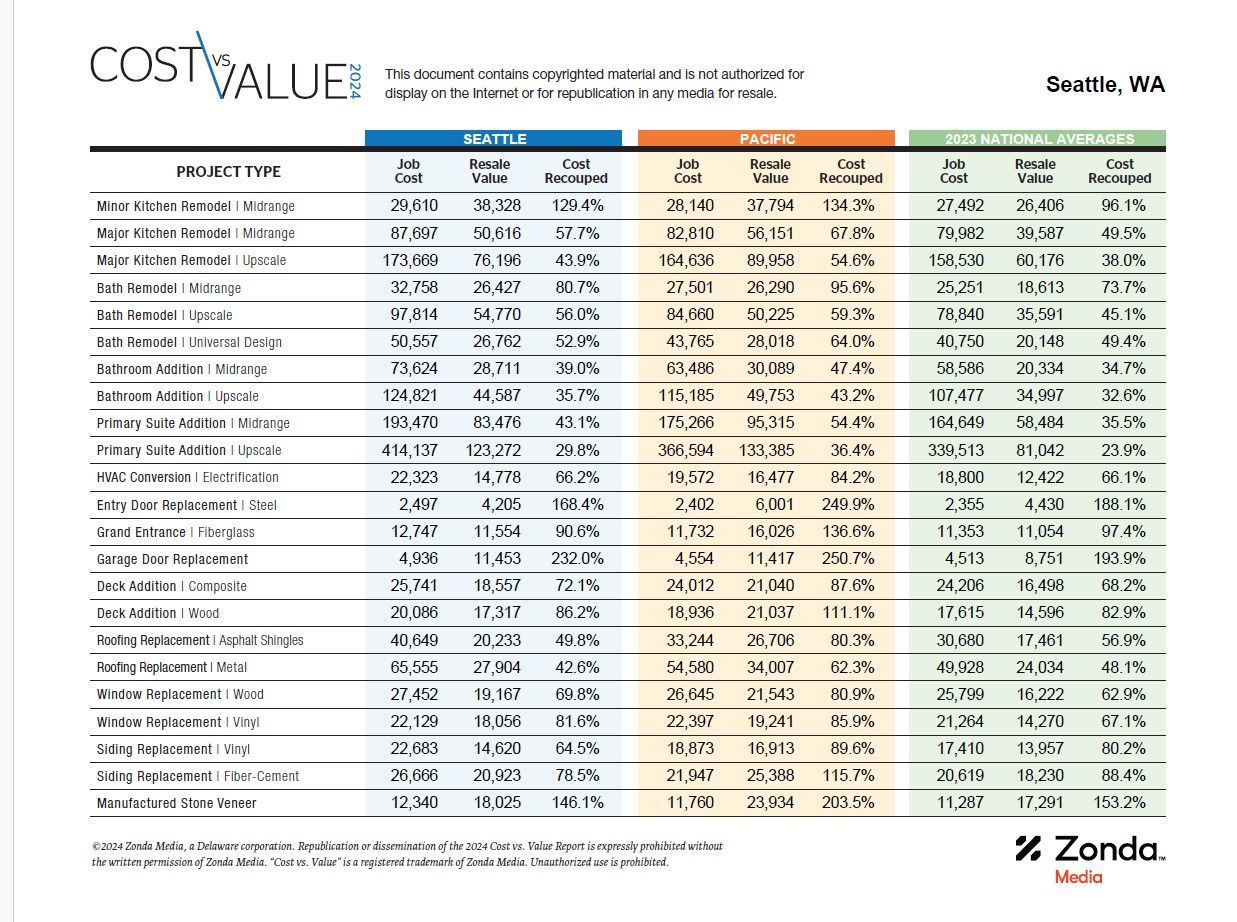
Garage Door Replacement Offers the Best ROI in 2024, Says National Report Homeowners on the Eastside of King County, WA, take note: replacing your garage door just became the smartest home improvement move of the year. According to the Journal of Light Construction’s 2024 Cost vs. Value Report, garage door replacement ranks #1 for return on investment, beating out popular projects like kitchen remodels and bathroom renovations. The report found that homeowners who replace their garage doors can recoup an impressive over 190% of the project cost upon resale—making it the only project that actually returns more value than it costs. Why such a strong return? Your garage door is one of the first things people see from the street. A new, stylish, and well-functioning door not only boosts curb appeal, but also improves energy efficiency, home security, and daily convenience. At Eastside Garage Door Repair, based in Renton, WA, we specialize in helping homeowners in Bellevue, Sammamish, Issaquah, Kirkland, and surrounding Eastside communities upgrade their garage doors with confidence. Whether you're prepping to sell your home or just want to enjoy a quieter, smoother, and more attractive door, we can help you choose the right style, materials, and opener system for your needs and budget. Our experienced team offers free estimates, transparent pricing, and professional installation with minimal disruption to your day. Plus, we’re licensed, bonded, insured, and proud to be a local business serving King County with honesty and quality workmanship. Ready to boost your home’s value and curb appeal? Call or text us today at 425-500-6708 or visit www.eastsidegaragedoorrepair.com to schedule your free consultation.